
Cameos: Greek Mythology – Works of Classical Painters
Técnica: La técnica que utilizo es glíptica. Glíptico: se llama el arte de producir camafeos. Proviene del griego «glifo» grabar, y es una forma particular del arte de la Escultura. Cameos trabajados en todo el arte de la Escultura en diferentes tipos de conchas exóticas.
Technique: The technique I use is glyptic. Glyptic: it is called the art of producing cameos. It comes from the Greek «glypho» to engrave, and it is a particular form of the art of Sculpture. Cameos worked throughout the art of Sculpture on different types of exotic seashells.
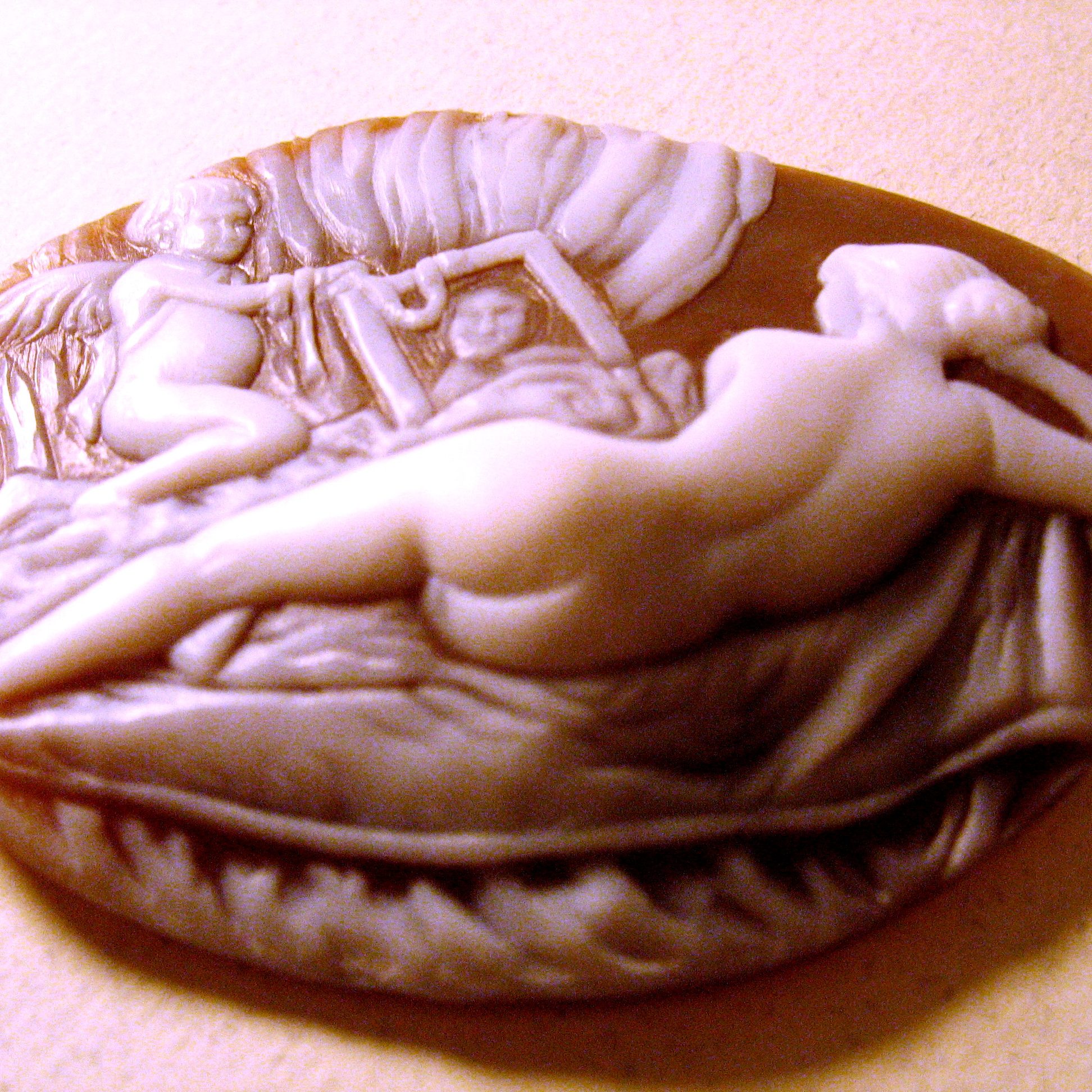
Cameo worked throughout the art of sculpture in an exotic seashell type cassis madagascariensis.
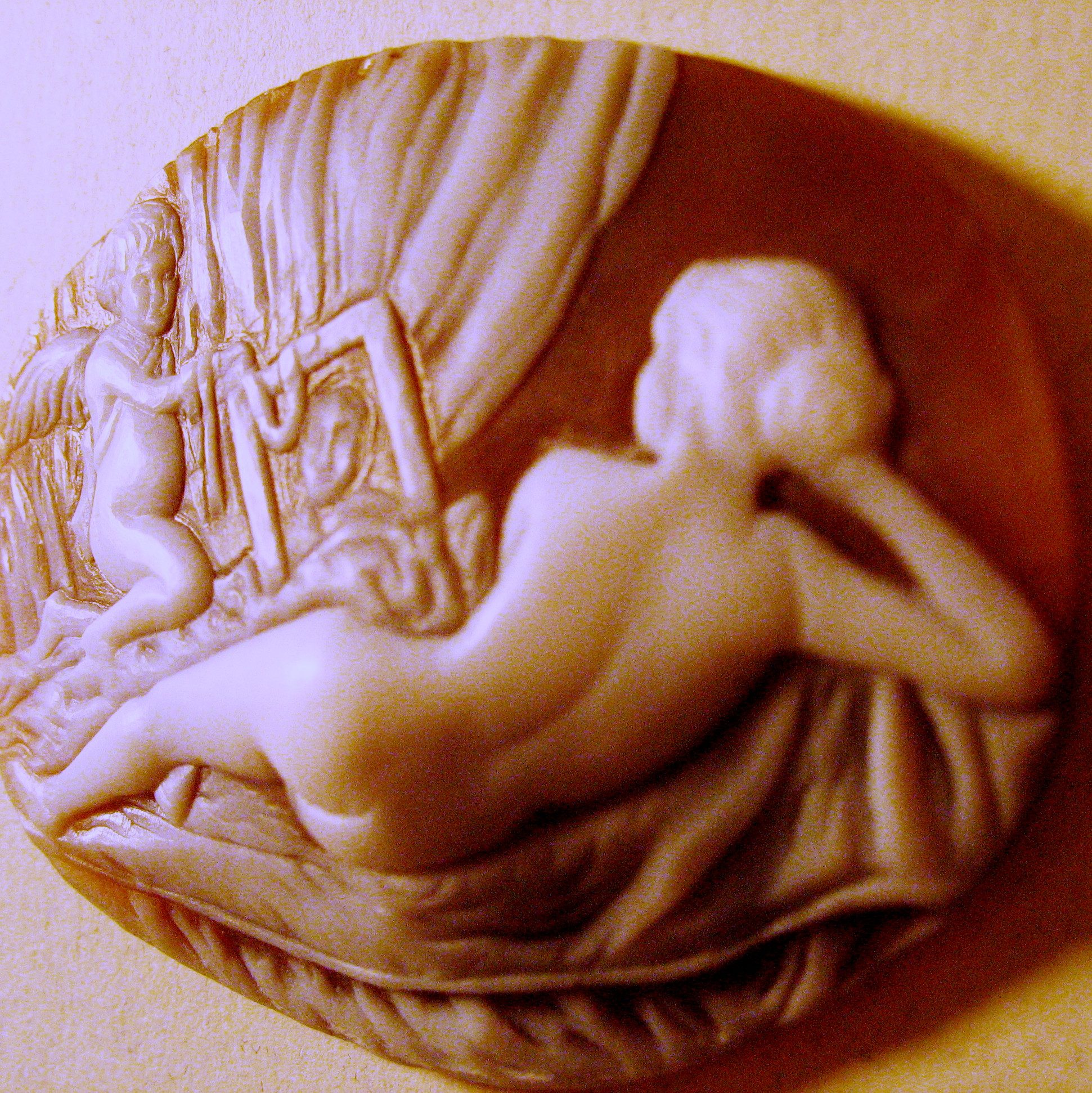
This is a very finely carved. It shows “The Venus of the Mirror” from Velazquez. She represents the wife of the Marquis of Eliche, which is why her face would be blurred so as not to be easily recognized.
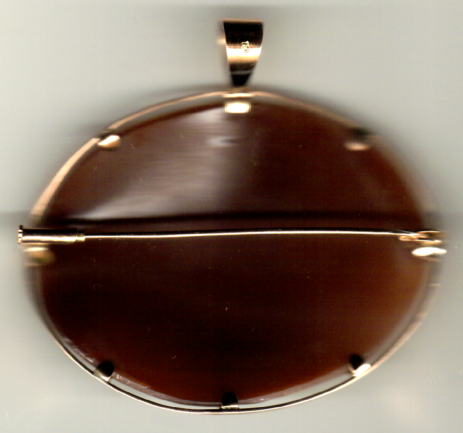
The frame is handcraft in 18K pink (gold weight is 5.4 grams).
Dimensions: 52mm by 40mm
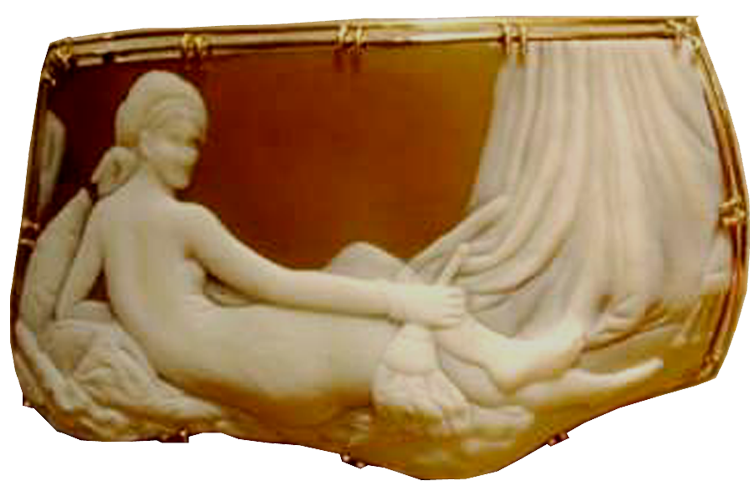
Cameo worked throughout the art of sculpture in an exotic seashell type cassis madagascariensis.
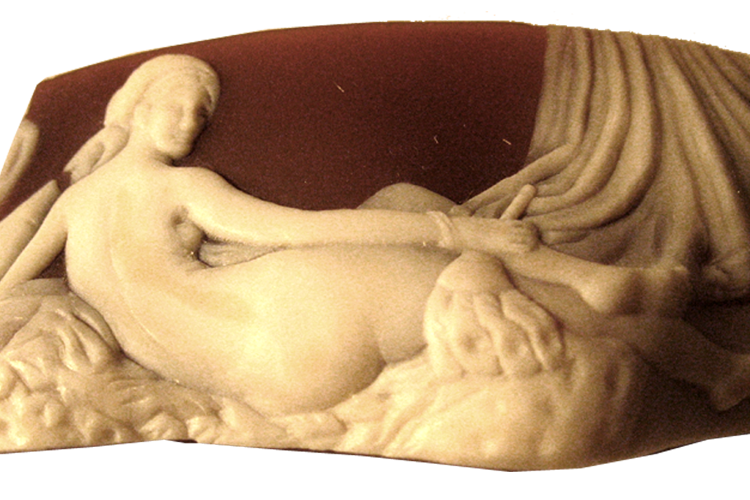
This cameo describes “The Grand Odalisque” one of the most famous portraits of Ingres.

The frame is handcraft in 18K pink (gold weight is 6.7 grams).
Dimensions: 60mm by 30mm
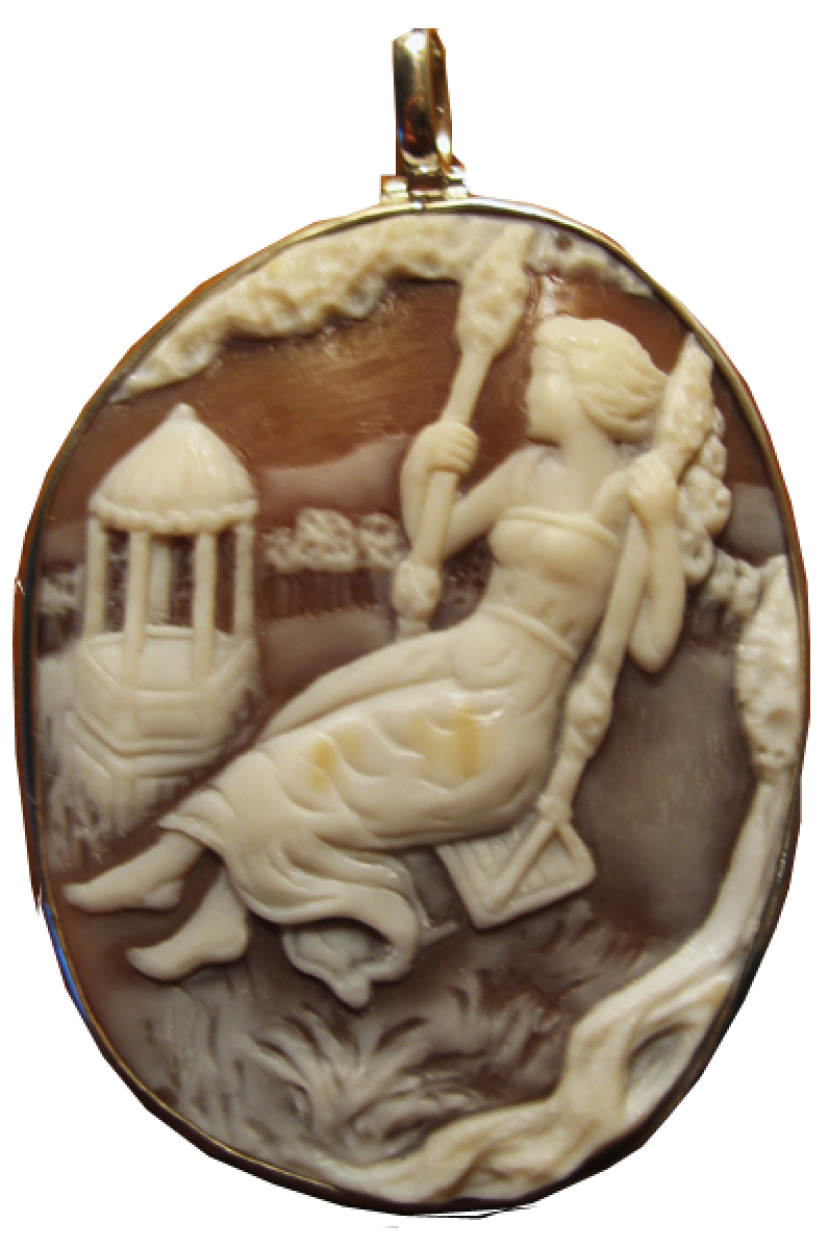
Cameo worked throughout the art of sculpture in an exotic seashell type cassis madagascariensis.

This Cameo is inspired by the work of the French Rococo artist Jean-Honoré Fragonard, “The Swing” made in 1767.
The frame is handcraft in silver 925.
Dimensions: 45mm by 38mm.

Mythological cameo describing the beautiful antinus vertumnus. Exact museum quality carving. It measures 45 mm long by 32 mm wide
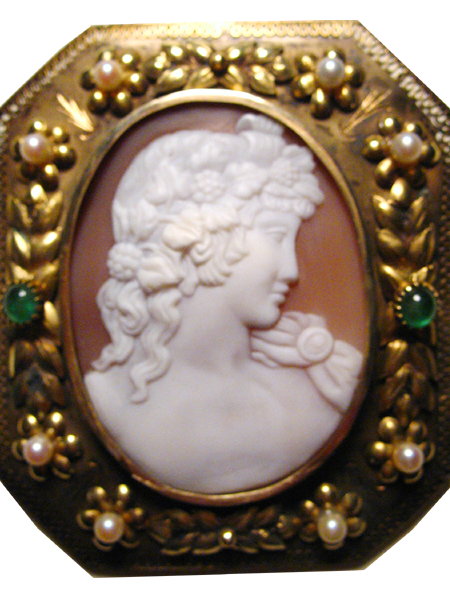
The framing was worked in 14k; please note the incredible lacework of the gold on the edges, with a meticulous artisanal application of flowers and leaves in 18k.
Each of the flowers has genuine 3.5 mm pearls in its center. And two natural emeralds cover the sides.

Antinous was a young man from ancient Greece who became the lover of the Roman emperor Hadrian. Antinous was born in Bithynia, Asia Minor, around 111 AD. It is said that he was extraordinarily beautiful.
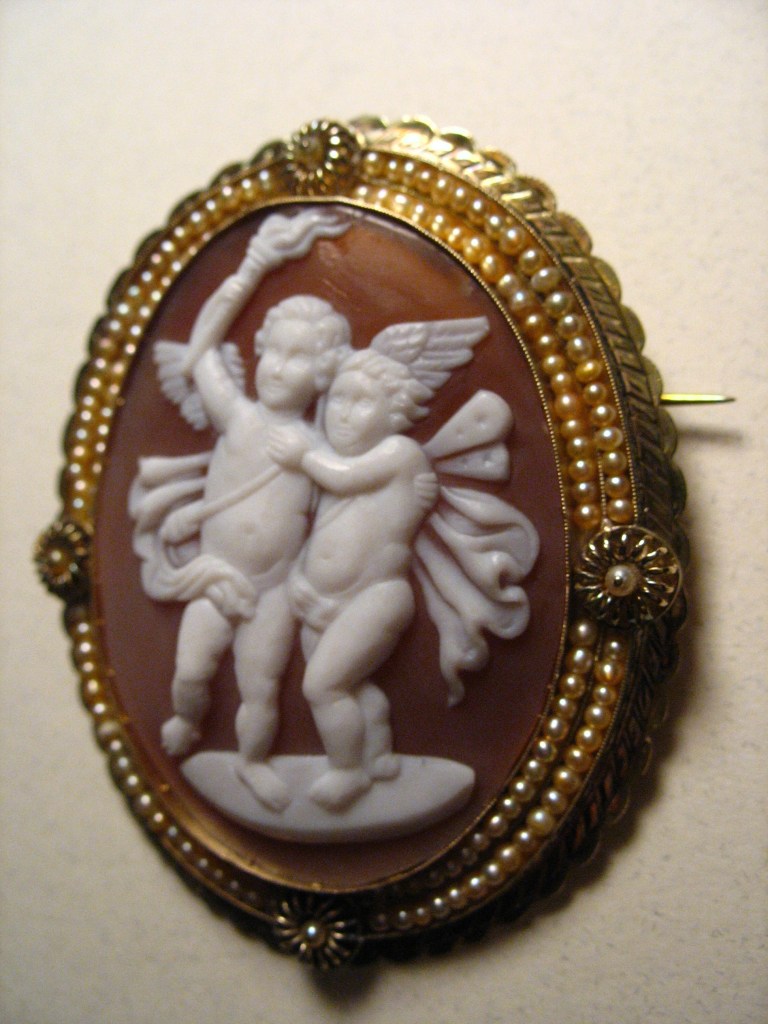
Eros and Psyche: Cameo worked throughout the art of sculpture in an exotic seashell type Cassis Madagascariensis

Mythological cameo describing eros and children’s psyche.
The myth of Eros and Psyche tells of the struggle for love and trust between Eros (or Cupid) and princess Psyche. In mythology, Eros represented the overwhelming power of love, which, by its force, can also destroy. The word “psyche” can be translated as “life” and as “soul.”
The cameo measures 43 mm long by 33 mm wide. The frame was worked in 12k, measures 55 mm long by 46 mm wide, and the weight of the gold is 11.5 grams. The cameo is surrounded by two rows of natural baby pink pearls (not cultured), measuring 1.5 mm in each diameter, with 180 pearls. The cameo changes from a brooch to an earring.
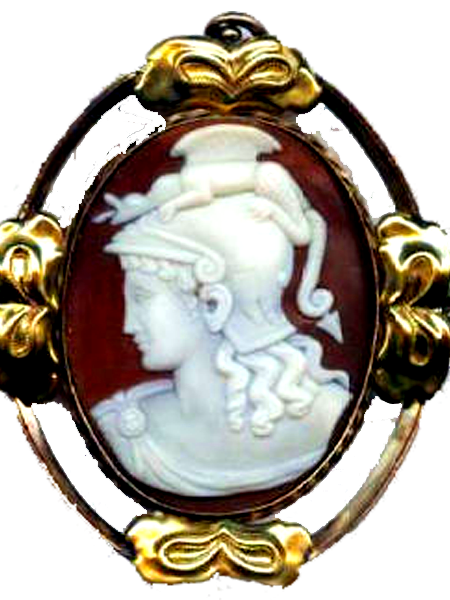
Aquiles: He was known for his bravery and war prowess during the Trojan War.
Cameo dimensions: 48 mm long by 37 mm wide. The frame was worked in 12k gold; it measures 69 mm long by 60 mm wide, and the weight of the gold is 14 grams. The total weight of the cameo is 21 grams.
The cameo is a brooch and an earring.
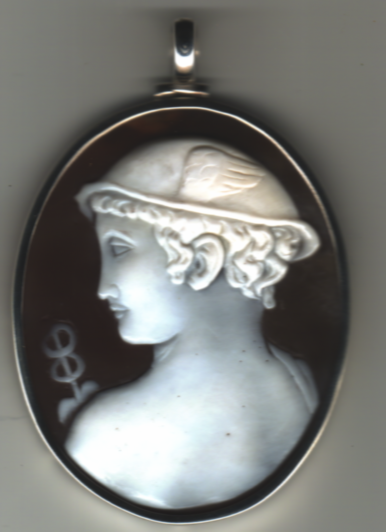
Hermes Technique: Cameo worked
throughout the art of sculpture in an exotic seashell type cassis madagascariensis. The frame is handcraft in silver 925. Dimensions: 58mm by 41mm
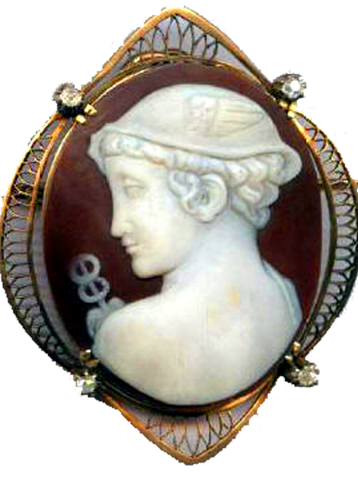
In Greek mythology, Hermes is the son of Zeus and is known to be the messenger of the gods and the patron saint of merchants, thieves, and travelers. Hermes plays a crucial role as an intermediary between the gods and mortals. He is also known for his cunning and speed.
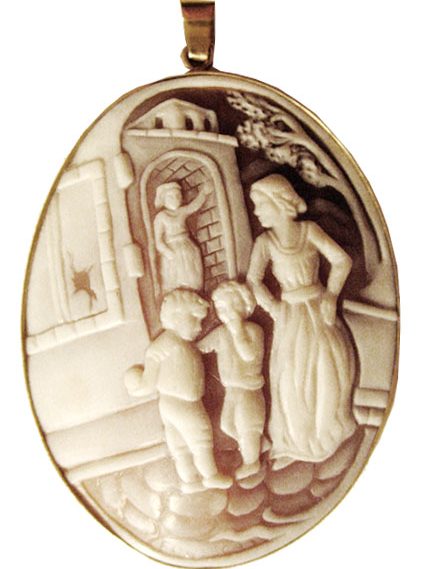
Cameo worked throughout the art of sculpture in an exotic seashell type Cassis Madagascariensis
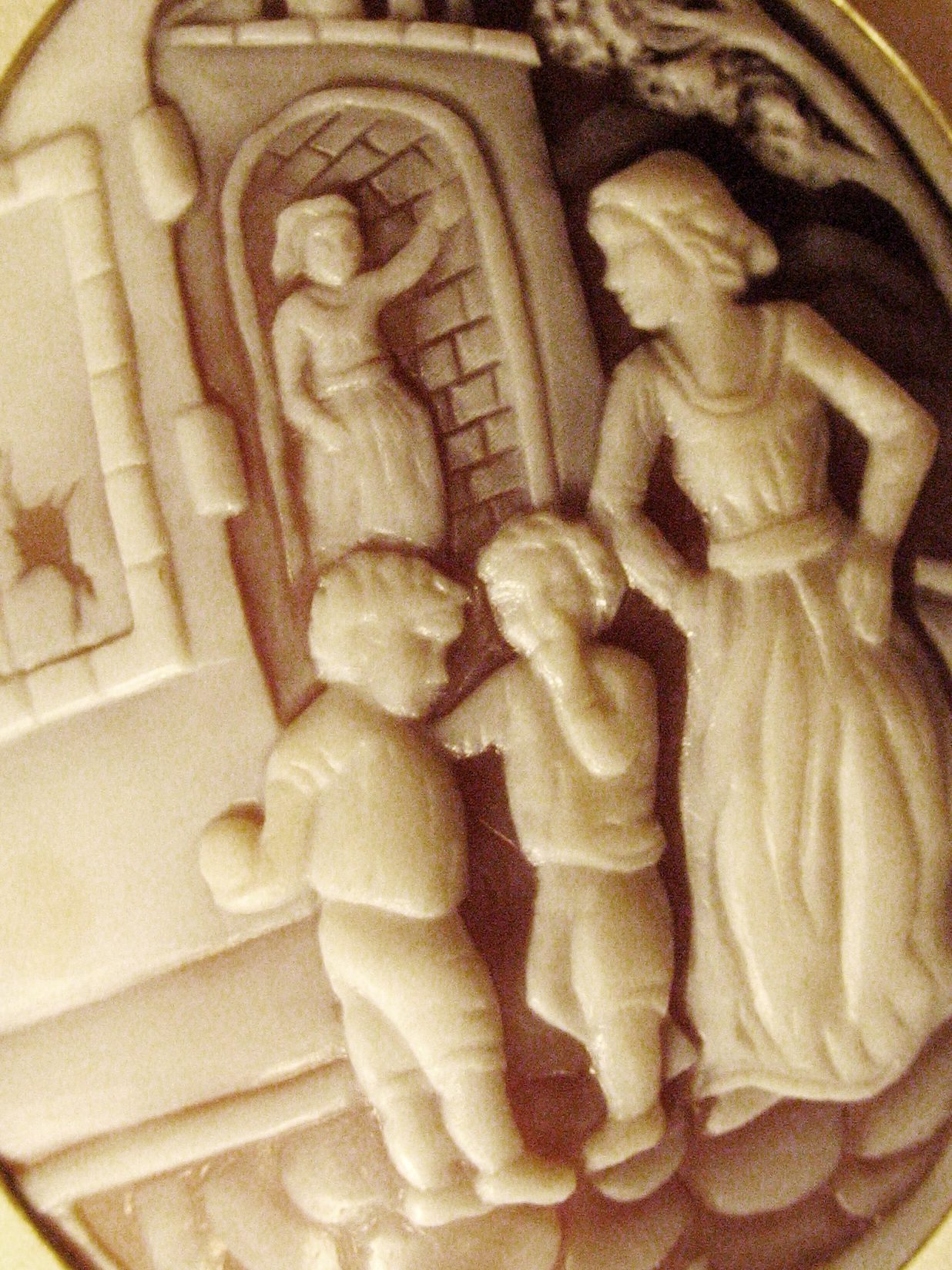
The frame was worked in 18k.
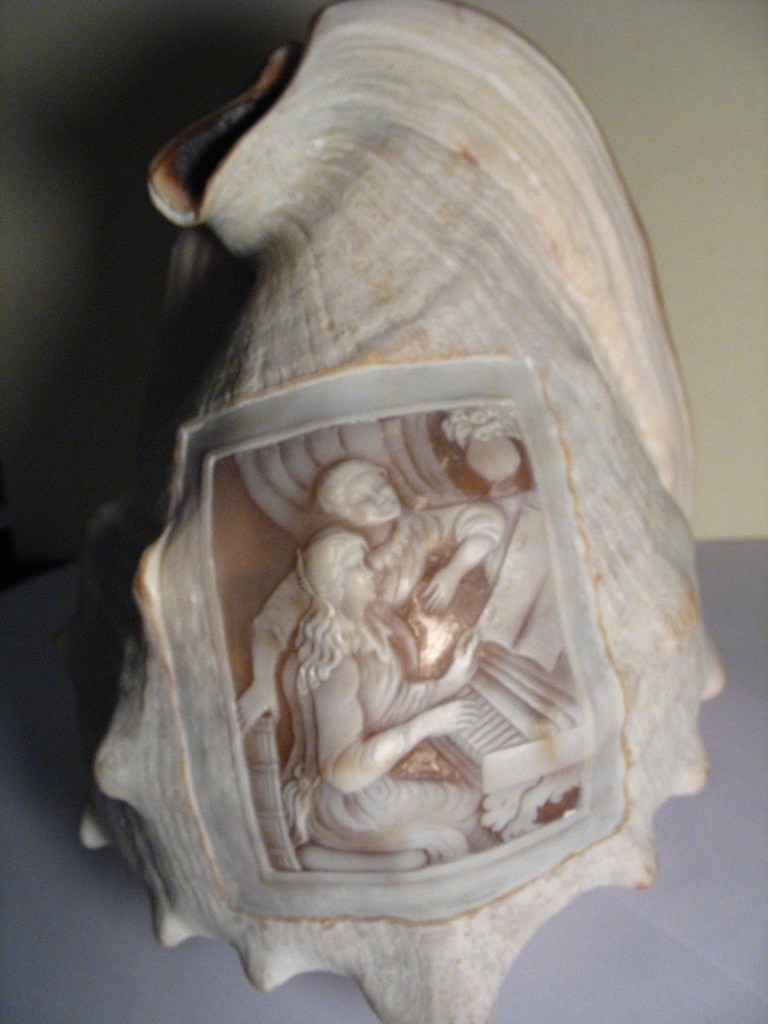
Inspired by Auguste Renoir’s work, Young Girls on the Piano, which was painted around 1892.
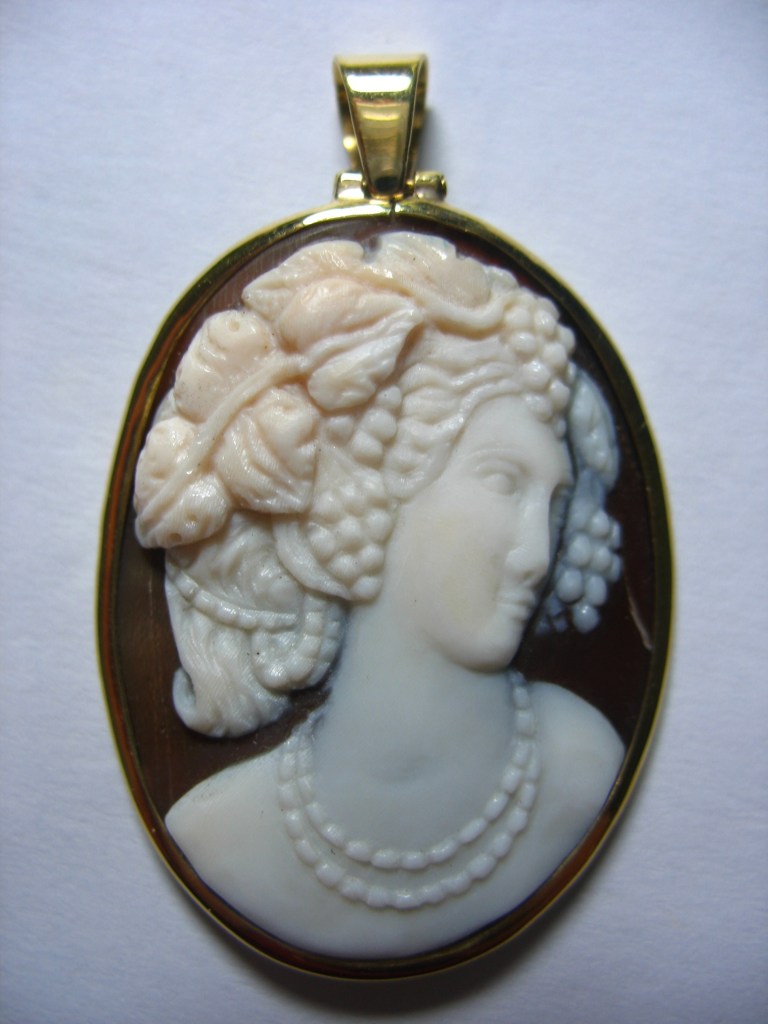
Cameos worked throughout the art of Sculpture in exotic seashells.

In painting and art: Throughout the history of art, the theme of the bacchantes has been represented in several works, showing these women in festive attitudes and often in states of ecstasy or drunkenness.
The Bacchantes were Greek women who worshiped the god Bacchus, also known as Dionysus. They are sometimes confused with the maenads, the nymphs who served them.
The Bacchantes, or worshipers of the god Bacchus, carried out the rites, the Bacchic mysteries, and secret ceremonies mostly prohibited to men. In Rome, the bacchanals or orgies were opened to everyone, degenerating in such a way that the Senate denied them.
Both older women and young women, and even maidens, went up in procession to a solitary mountain, and for a few days, without contact with any man, they launched into a debauchery of alcohol, mysticism, and hallucinogens.
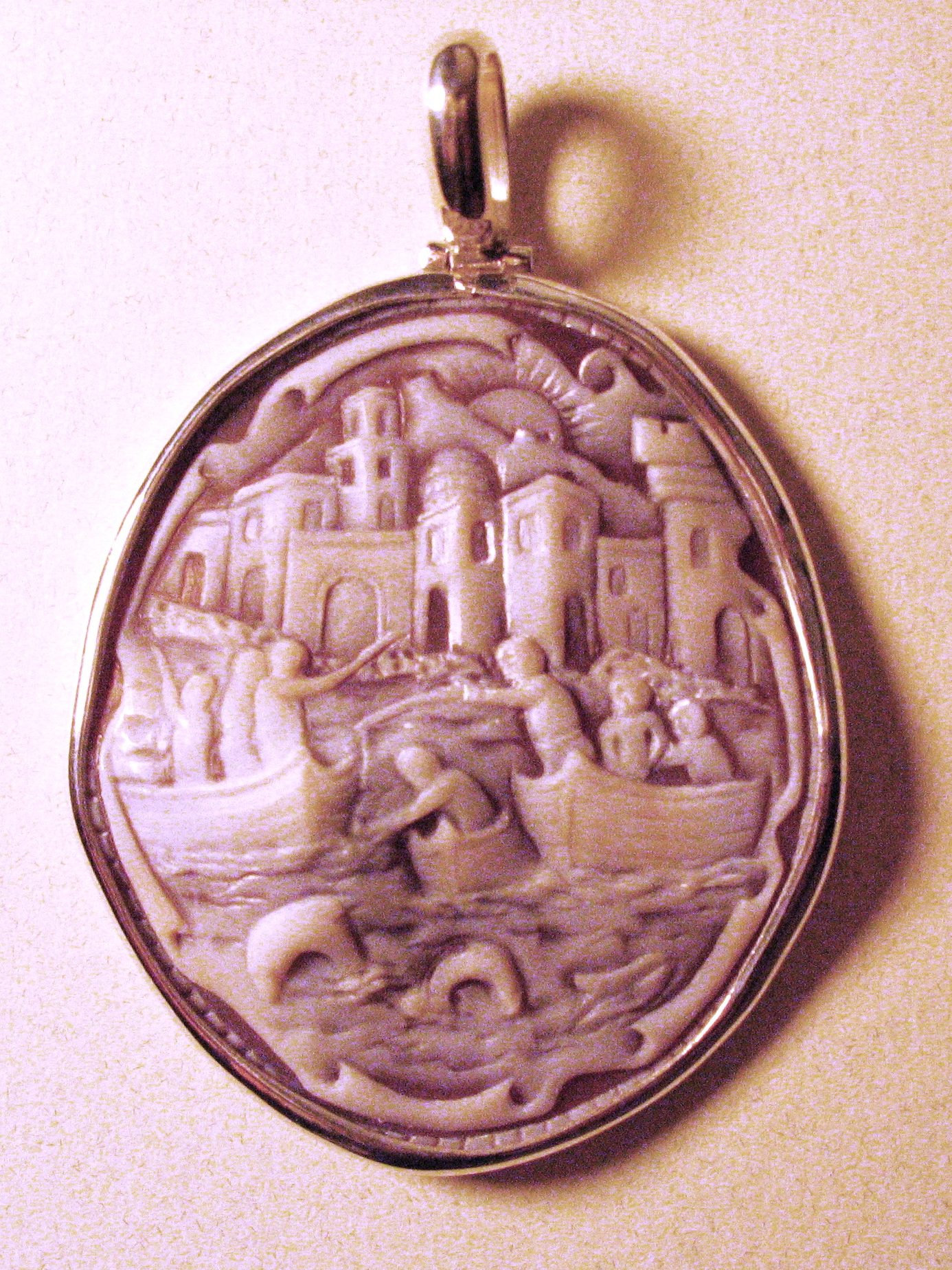
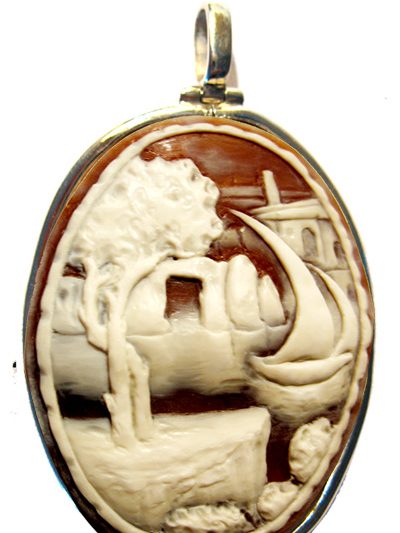
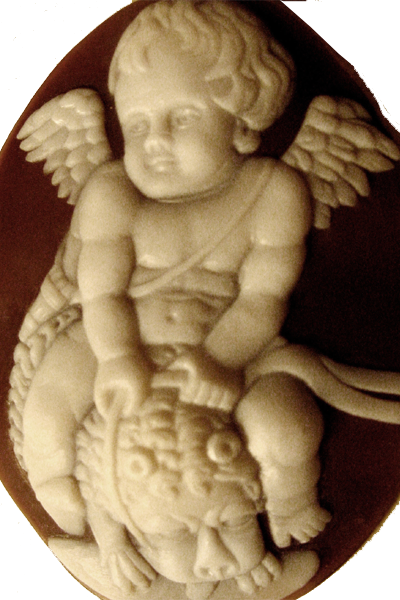
Putto & Lion: In Italian, putto means winged child, angel, or, rarely, little child.
Cameo worked throughout the art of sculpture in an exotic seashell type Cassis Madagascariensis

This cameo describes the work of art called “La venus herida por Diomedes” created by J. Auguste Dominique Ingres in 1844.
Diomedes was one of the heroes who figth with Aquiles against the troyans. The hurts Venus the God who protected one of his enemies, and as a consequence, he suffered a terrible punishment he died and lost his fortune.
The frame is handcraft in 18K pink (gold weight is 4.2 grams).
Dimensions: 52mm by 42mm

Woman with violin: Cameo worked throughout the art of sculpture in an exotic seashell type cassis madagascariensis. The frame is handcraft in 18K pink (gold weight is 5.1 grams). DIimensions: 52mm by 42mm
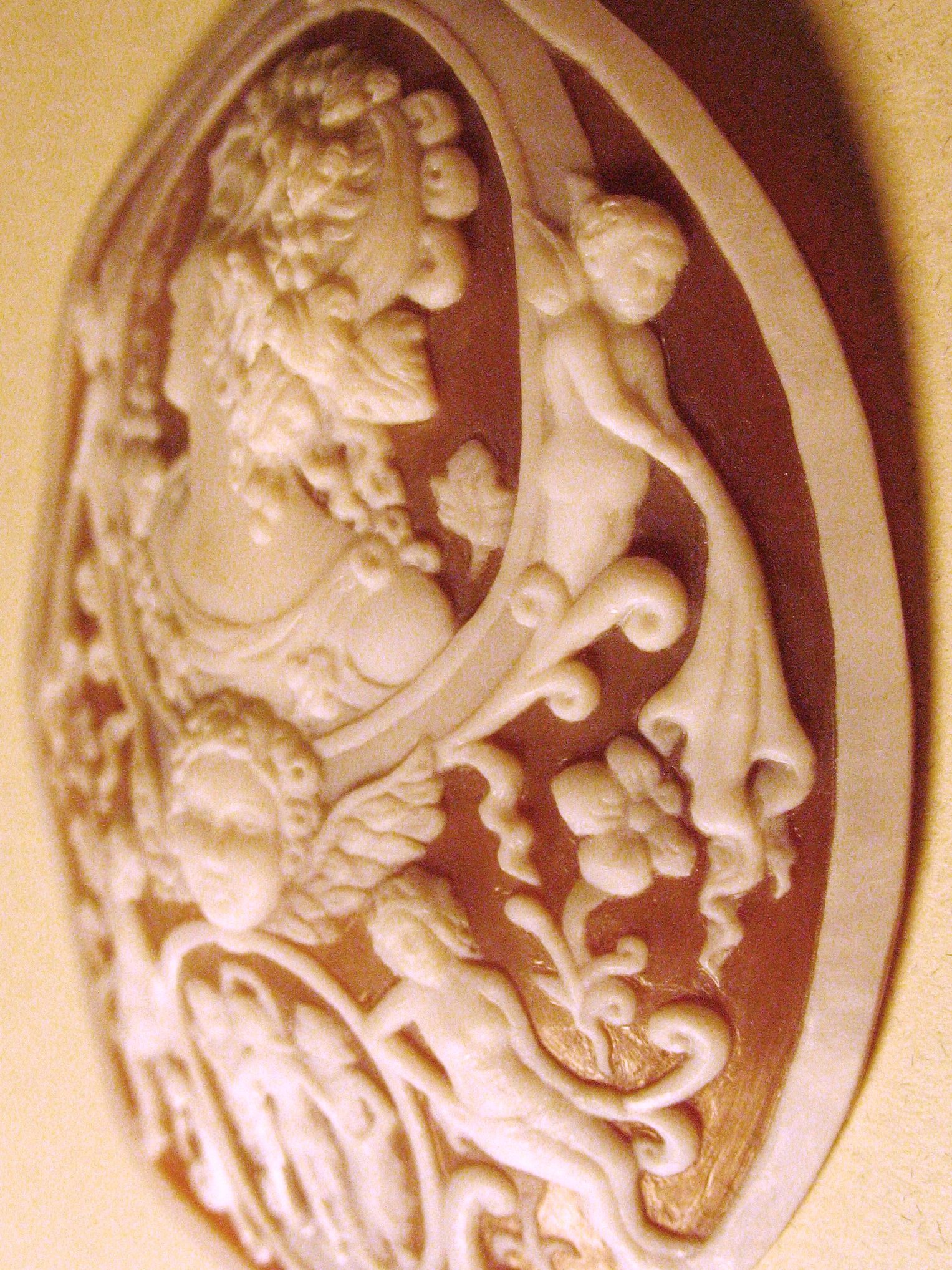
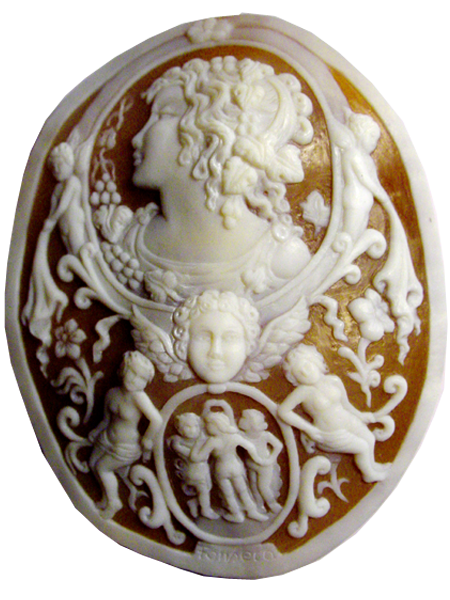
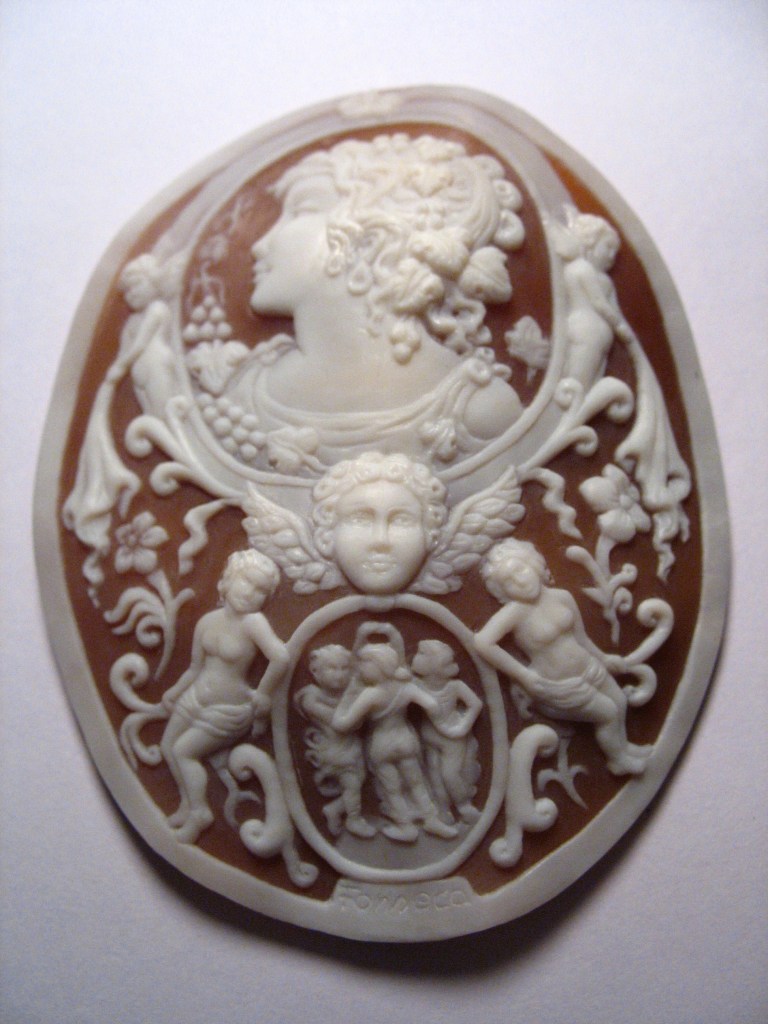
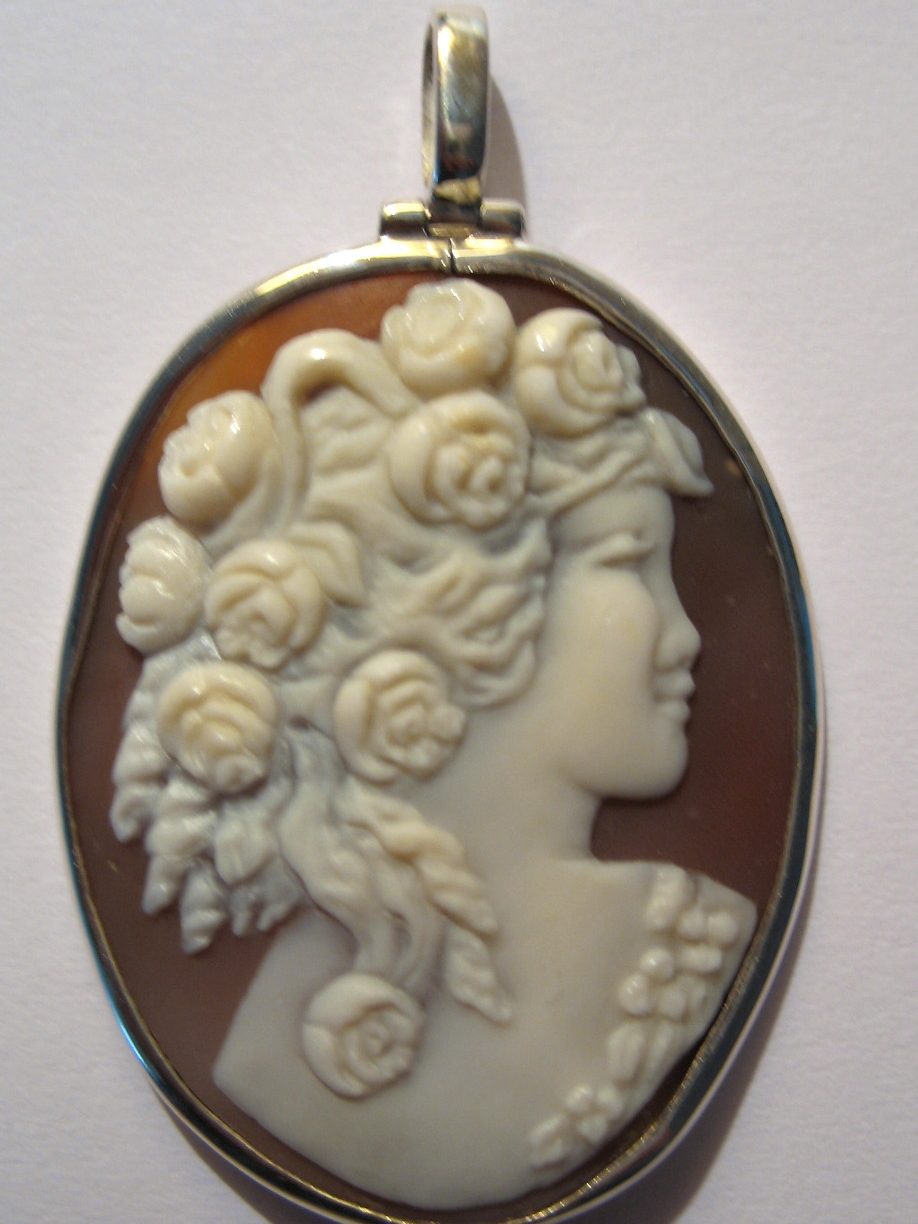
Mythological cameo describing Chloris or Flora.

Flora is the Roman goddess of flowers and spring. The Greek equivalent of her would be Chloris, a nymph associated with flowers and spring in Greek mythology.
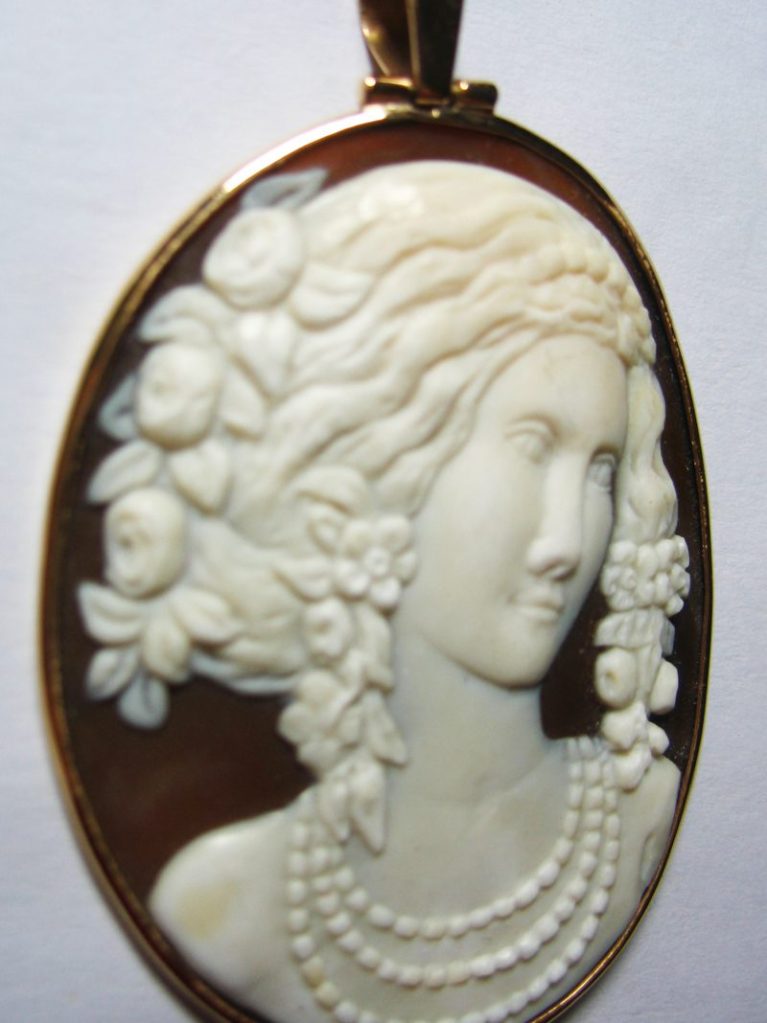
Chloris married the god of the west wind, Zephyr, and they were considered responsible for bringing spring to the world.
¿Tienes algún proyecto en mente?
 Ana Verónica Fonseca